George Selfridge
George Selfridge, a military-looking gentleman addressed as "Colonel," is the husband of Myra Selfridge (née Gaunt) and the father of the little girl also named Myra. He enters the story as a minor but pivotal figure: his marriage to the woman John Rowland loved and lost is the cause of Rowland's despair, and his death in the underwriter's office seals the fate of the insurance claim. Though he appears in only a few scenes, his presence—and his absence—shapes the novel's emotional and financial resolutions.
Identity and Background
George Selfridge is introduced in the second chapter, when his wife, agitated after glimpsing John Rowland among the crew, rushes into the library where he sits reading. He is described as "military-looking," a detail consistent with his later title of "Colonel." He is a man of some social standing, wealthy enough to be a major stockholder in the Titan, owning about one hundred thousand pounds of the company's stock. He is also a member of Lloyds, the great insurance association, though he takes no active part in its business. His marriage to Myra Gaunt, a young woman Rowland had courted and lost, places him at the center of the romantic triangle that drives Rowland's bitterness.
Life and Plot Trajectory
George's role in the plot is largely reactive. When his wife tells him of Rowland's presence on the ship, he dismisses her fears, calling Rowland a "hang-dog ruffian" and a "poor devil" who is "harmless now." He advises her to stay in her cabin and avoid him. Later, after the collision with the Royal Age, when Rowland is accused of threatening the child, George accompanies his wife to the captain's office and demands that Rowland be confined, vowing to shoot him if he meddles with his family again. He is a protective husband and father, but his confidence in the ship's safety—and in the social order—proves misplaced.
Relationships and Conflict
George's relationship with Rowland is one of mutual antagonism, though they never directly confront each other until the final scenes. Rowland, who once loved Myra Gaunt, sees George as the man who "stepped coolly and easily into my heaven." George, in turn, views Rowland as a dangerous, disgraced suitor who has followed his wife to sea. Their conflict is rooted in class and jealousy, but it is also a clash between the respectable world George represents and the fallen world of the sailor. George's death, however, transforms this rivalry: he dies without ever knowing that Rowland saved his daughter's life, and his last act is to claim his granddaughter, leaving Rowland to carry the child to her mother.
Change and Ending
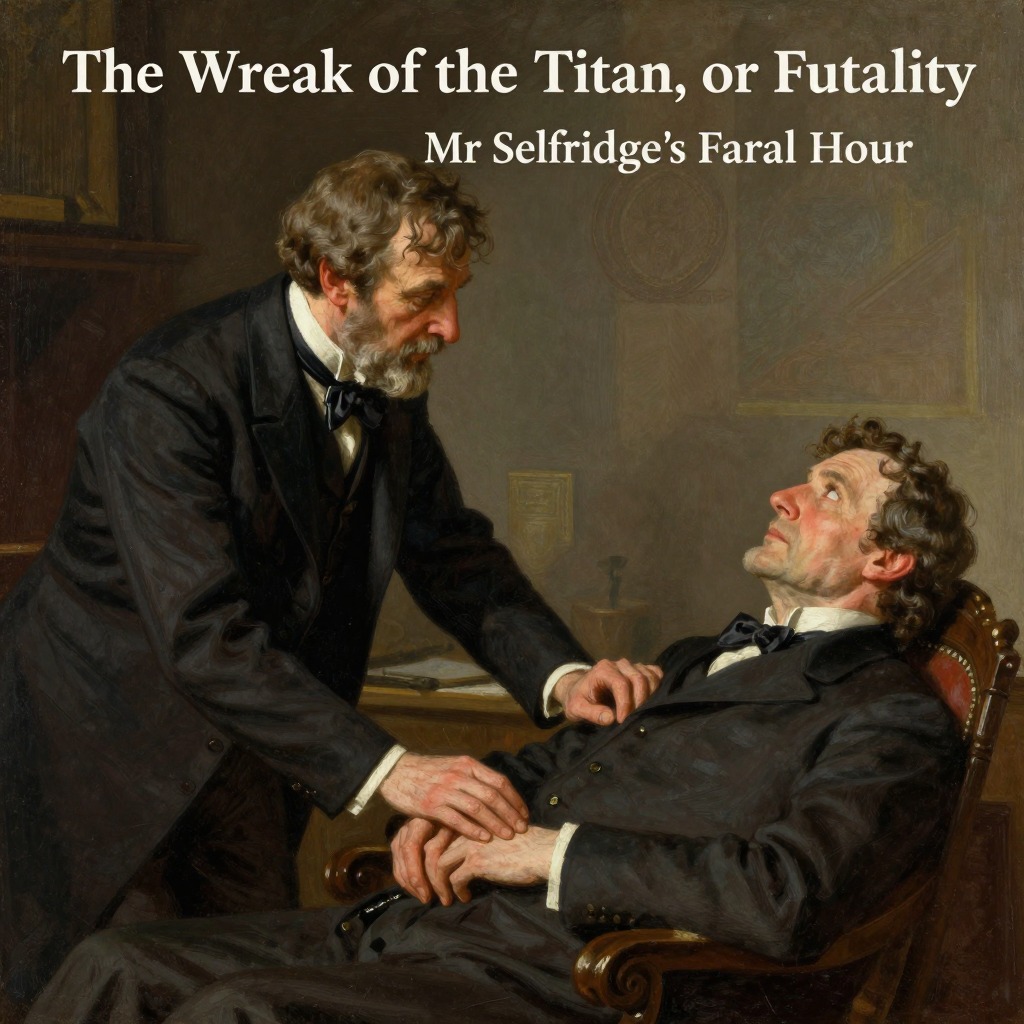
George's death is sudden and tragic. In Mr. Meyer's office, after the insurance dispute has been settled against him, he learns that he is ruined—his entire fortune, invested in Titan stock, is lost. The news, combined with the joy of finding his granddaughter, proves too much for his heart. He stumbles, falls, and dies of heart failure before a doctor can arrive. His death leaves little Myra an orphan on her father's side, and it removes the last obstacle to Rowland's quiet act of renunciation: Rowland, who could have testified to void the insurance and ruin the company, chooses instead to protect the child's inheritance, refusing to testify. George's death thus becomes the catalyst for Rowland's moral choice, and it underscores the novel's theme of the fragility of human plans in the face of fate.
Narrative Role and Evaluation
George Selfridge serves as a foil to John Rowland. Where Rowland is degraded, suffering, and ultimately redeemed, George is respectable, comfortable, and ultimately destroyed by the very system he represents. His death is ironic: he dies not from the shipwreck, but from the financial ruin that follows it, a victim of the same greed and negligence that sank the Titan. His character is thinly drawn, but his function is clear: he embodies the complacent, moneyed world that Rowland has fallen from, and his demise clears the way for Rowland's quiet heroism. In the end, George is remembered not for his own actions, but for the daughter he leaves behind and the debt that Rowland, in his own way, repays.